
Anwar Khan
Private India Specialist · Agra
Anwar Khan
·Private India SpecialistAgra native. 15 years full-time guiding. Lives in Tajganj, 500 metres from the Taj Mahal. Every guide on this site is written from direct experience — the exact routes he runs, the timings he recommends, and the mistakes he has watched tourists make.
Why Agra Fort Deserves a Full Morning
Most visitors spend four hours at the Taj Mahal and then feel they're done with Agra. They're wrong. Agra Fort — a ten-minute drive away — is one of the finest examples of Mughal military and palace architecture in the world, and almost every section carries a story more dramatic than anything you'll read in a guidebook.
Built by Emperor Akbar in 1565 from deep red Agra sandstone, later expanded and refined by Jahangir and Shah Jahan in white marble, the fort is three monuments layered on top of each other. Akbar's military genius, Jahangir's courtly grandeur, and Shah Jahan's obsessive love for marble and symmetry — all visible in one 2.5-kilometre walk.
What to See Inside Agra Fort
Diwan-i-Am (Hall of Public Audience)
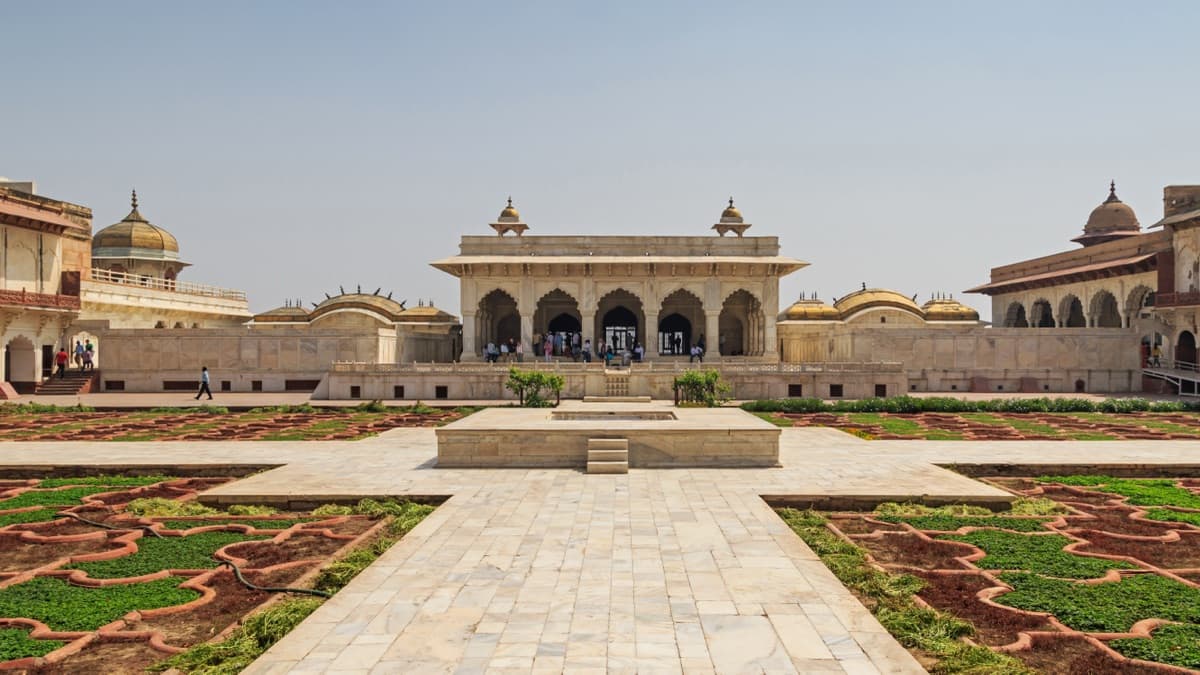
The first great courtyard — where the Emperor received petitions from ordinary subjects. The canopied marble throne at the far end, inlaid with precious stones, is where Shah Jahan sat. Beneath the raised platform, the court musicians played. Without a guide, it looks like an empty courtyard. With one, it becomes the setting of Mughal court politics in cinematic detail.
Diwan-i-Khas (Hall of Private Audience)
The more intimate chamber where the Emperor met nobles, ambassadors, and governors. The columns are decorated with the finest pietra dura work in the fort — semi-precious stones set into white marble in floral and geometric patterns. Shah Jahan reportedly said of this room: “If there is paradise on earth, it is here, it is here, it is here.”
Musamman Burj — The Most Emotional Room in India
This octagonal marble tower is where the tour becomes something else entirely. Shah Jahan was imprisoned here by his son Aurangzeb in 1658 after losing a succession war. He spent the last eight years of his life in this room — which has a direct, unobstructed view south across the Yamuna River to the Taj Mahal.
Whether he had the tower window aligned intentionally or whether this is legend, the effect of standing at that window today — looking out at the white marble monument he built for his wife — is genuinely affecting. This moment alone is worth the entire visit.
Jahangiri Mahal
The oldest surviving palace section inside the fort, built by Akbar as a zenana (women's quarters) and later used by Jahangir. Unlike the white marble of Shah Jahan's additions, this is deep red sandstone with heavy Hindu architectural influences — evidence of Akbar's deliberate policy of cultural synthesis. The large stone bath in the courtyard was reputedly filled with rose water for Nur Jahan.
Macchi Bhawan (Fish Pavilion)
A pavilion now largely open but once enclosed, where the imperial family kept ornamental fish. The fish ponds are gone but the scale — and the intimacy of the carved marble screens that would have filtered the light — gives you a sense of how different private imperial life was from the public ceremonies in the Diwan-i-Am.
Combining Agra Fort with the Taj Mahal
The most efficient and emotionally coherent order is: Taj Mahal first at sunrise, then Agra Fort from 9am. This sequence makes sense historically — the Taj was Shah Jahan's completed vision, the Fort was where that vision was taken from him. Seeing them in that order gives the afternoon at the Fort a different weight.
Anwar runs a combined private tour covering both in a single day — typically 5–6 hours total, with a break for tea and lunch. This is one of the most common single-day itineraries for visitors on a tight schedule.
Practical Information
Getting There
Agra Fort is on Agra Fort Road, about 2.5km northwest of the Taj Mahal. By auto-rickshaw from the Taj, allow 10–15 minutes. With a private car and driver, 5–8 minutes. The main entrance (Amar Singh Gate) is on the south side.
Tickets
Foreign nationals: ₹650. Indian nationals: ₹35. Children under 15: free. Tickets can be purchased at the gate or online at the ASI booking portal. The audio guide (₹118) covers the main monuments but is no substitute for a knowledgeable human guide who can answer your specific questions.
What to Wear
There is no dress code at Agra Fort (unlike some temples). Comfortable walking shoes are essential — the fort covers 94 acres and the stone pathways are uneven in places. A hat and water bottle are important in summer months.
Photography
Photography is permitted throughout. The best light for the Taj Mahal view from Musamman Burj is in the late afternoon (golden hour), when the marble turns pale gold. If visiting the fort independently, time your arrival to reach the Musamman Burj in the last hour before sunset.
Common Questions
How long does an Agra Fort tour take?▼
Can I visit Agra Fort and Taj Mahal on the same day?▼
How much does Agra Fort entry cost in 2025?▼
Can you see the Taj Mahal from Agra Fort?▼
Book a Private Agra Fort Tour
Half-day Agra Fort, full-day combined Taj + Fort, or a multi-day Golden Triangle — Anwar Khan arranges everything privately.