
Anwar Khan
Private India Specialist · Agra
Anwar Khan
·Private India SpecialistAgra native. 15 years full-time guiding. Lives in Tajganj, 500 metres from the Taj Mahal. Every guide on this site is written from direct experience — the exact routes he runs, the timings he recommends, and the mistakes he has watched tourists make.
Rajasthan is the India most people imagine before they arrive — maharaja palaces, camel caravans, women in vivid saris, and fortresses that have never fallen. It also contains some of the country's most technically demanding travel. This guide is what I give every guest before we set off.
Why Rajasthan?
Rajasthan is India's largest state and its most architecturally extravagant. The Rajput kingdoms that ruled here for centuries built on a scale that has not been replicated elsewhere in the subcontinent — Mehrangarh Fort in Jodhpur rises 120 metres from a solid rock outcrop; the City Palace in Udaipur took four centuries of successive maharajas to complete; Jaisalmer Fort is a golden sandstone city where 3,000 people still live inside 12th-century walls.
What makes Rajasthan extraordinary is that it is not a museum. The royal families still live in many of the palaces. The artisan traditions — blue pottery, block-print textiles, miniature paintings, gem-cutting — are still practised by the same family lineages for generations. The bazaars sell the same goods they have sold for centuries. This is living heritage, not recreation.
The trade-off is distance. Rajasthan's main cities are spread across 342,000 km². Getting between them requires either long drives (Jodhpur to Jaisalmer is 5 hours) or domestic flights. A private car with driver is the only option that gives you both flexibility and comfort across the full circuit.
City by City

Jaipur
The Pink City · 2 days recommended
- Amber Fort — Rajput hilltop fortress with mirror palace interiors (Sheesh Mahal)
- City Palace — royal residence still occupied by the Jaipur royal family
- Jantar Mantar — Maharaja Jai Singh's 18th-century astronomical observatory (UNESCO)
- Hawa Mahal — latticed five-storey facade built so royal women could watch street life unseen
- Johari Bazaar — gems, textiles, blue pottery from India's craft capital
Anwar's tip
Amber Fort in the first hour after opening (8am) — the mirror palace interiors reflect best in morning light and crowds are manageable.
Jodhpur
The Blue City · 2 days recommended
- Mehrangarh Fort — one of India's largest forts, rising 120m above the city on a rocky outcrop
- Jaswant Thada — delicate white marble cenotaph, photogenic at golden hour
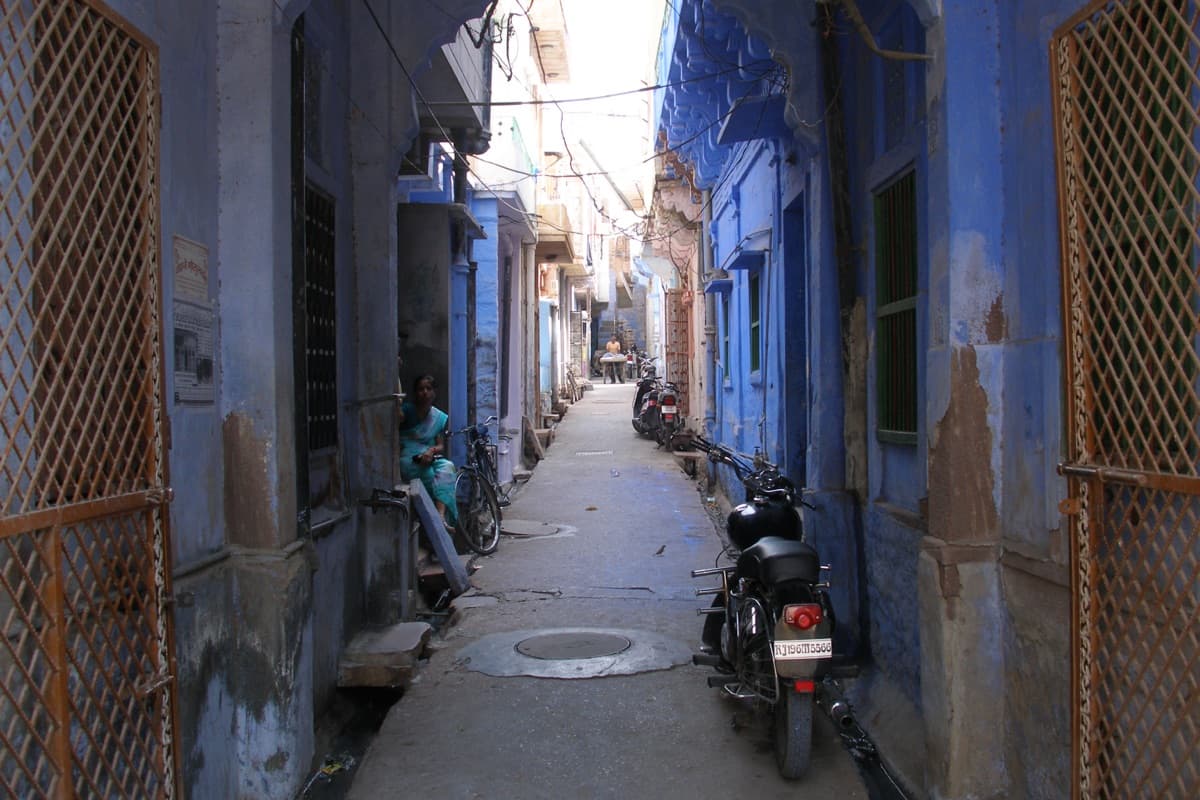
- The blue-painted old city — wander the lanes below the fort for the 'Blue City' perspective
- Umaid Bhawan Palace — still home to the Jodhpur royal family; the museum wing is extraordinary
- Sardar Market — spices, textiles, and street food around the clock tower
Anwar's tip
The rooftop view of Mehrangarh Fort from the blue-painted neighbourhood below is best at sunrise. Hire a local guide for the fort itself — the audio guide misses the best stories.
Jaisalmer
The Golden City · 2–3 days recommended
- Jaisalmer Fort — a living medieval city; 3,000 people still live within its walls
- Patwon Ki Haveli — five connected merchant mansions with intricate stone filigree facades
- Sam Sand Dunes — camel safari and overnight desert camp, 45 minutes from Jaisalmer
- Gadisar Lake — 14th-century reservoir with ornate ghats and migratory birds in winter
- Kuldhara village — abandoned overnight in 1825; the mystery of why makes it haunting
Anwar's tip
Stay at least one night in a desert camp at Sam Dunes. The silence at midnight — no light pollution, the Milky Way overhead — is unlike anything in western India.
Udaipur
The City of Lakes · 2–3 days recommended
- City Palace — the largest palace complex in Rajasthan, overlooking Lake Pichola
- Jag Mandir — island palace in the middle of Lake Pichola; boat access only
- Monsoon Palace — hilltop royal retreat with 360° views over the Aravalli hills and lakes
- Jagdish Temple — living Hindu temple from 1651, open all day, free entry
- Evening boat trip on Lake Pichola — palace lights reflecting on the water at dusk
Anwar's tip
Book a room on Lake Pichola if budget allows — waking to the City Palace reflected on still water is one of the great hotel experiences in India.
10-Day Rajasthan Itinerary
The complete circuit. Starts and ends with flights via Jaipur and Udaipur.
Best Time to Visit Rajasthan
Clear skies, 10–28°C. Pushkar Fair (Nov), Jaisalmer Festival (Feb). Peak travel — book accommodation early.
35–45°C. Manageable with early starts (monuments by 8am, done by noon). Fewer tourists. Prices drop.
Unpredictable rain. Udaipur is lush and beautiful. Jaisalmer dunes inaccessible in heavy rain. Good for palace hotels with gardens.
Combining Rajasthan with the Golden Triangle
The most popular extended circuit combines the Golden Triangle (Delhi → Agra → Jaipur) with a Rajasthan loop. Jaipur is the natural junction — it appears in both itineraries, which means the combined route flows without backtracking.
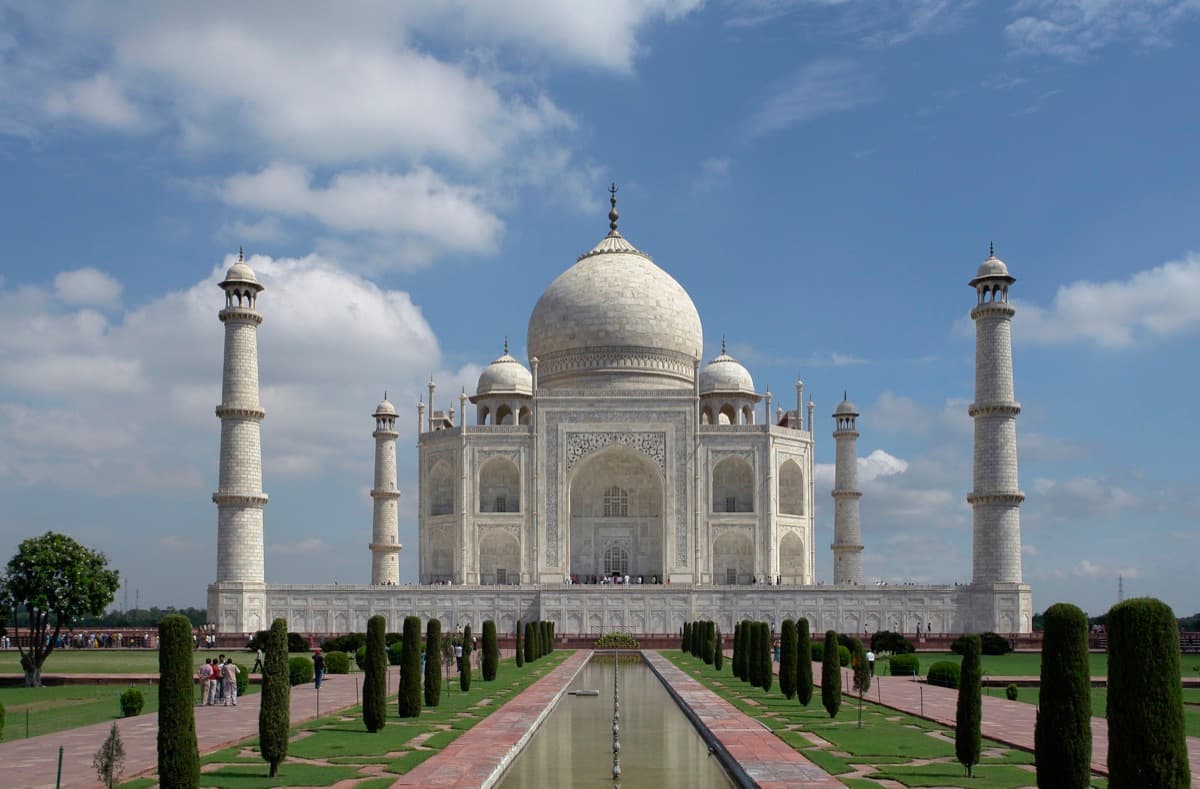
A typical 14-day combined route: Delhi (2) → Agra with Taj Mahal (2) → Jaipur (2) → Pushkar (1) → Jodhpur (2) → Jaisalmer (2) → Udaipur (2) → fly from Udaipur (1). This is our most requested private itinerary.
Read the Golden Triangle itinerary guide →Insider Tips
Arrive at Mehrangarh Fort at 8am
Jodhpur's great fort opens at 9am officially, but the surrounding blue city is best in early morning light before the heat arrives. Walk the lanes below the fort first, then enter. The museum inside is one of the best in Rajasthan — allow three hours minimum.
The living Jaisalmer Fort needs careful navigation
The fort is home to 3,000 residents and is a working community. Respect private lanes, do not photograph people without asking, and support the handful of family-run craft shops rather than the commission-driven stalls near the main gate. The sunset view from Dussehra Chowk is free and extraordinary.
Udaipur boat trips: morning not evening
Every guide recommends sunset boat trips on Lake Pichola. They are beautiful — but crowded. A morning boat at 8am gives you Jag Mandir palace almost alone, with mist on the lake and the City Palace lit by eastern light. Book through your hotel, not through touts at the ghat.
Jaipur gem shops — how to avoid being overcharged
Jaipur is India's gemstone cutting capital. It is also the city where the most tourists are overcharged for gems. If you are not buying for resale, focus on set jewellery (more visible value than loose stones) and only buy from shops your guide is not receiving commission from. Ask directly — legitimate guides will tell you.
Private Tour
Rajasthan with Anwar Khan
10-day private Rajasthan Heritage tour. Jaipur, Jodhpur, Jaisalmer, Udaipur. Heritage palace hotels, private AC car, expert guide throughout. From $2,990 / £2,360 per person.
Frequently Asked Questions
How many days do you need to tour Rajasthan?
8 to 10 days covers Jaipur, Jodhpur, Jaisalmer, and Udaipur with reasonable time in each city. 14 days allows you to add Pushkar, Ranthambore for wildlife, and Bikaner. A 5-day trip is possible if you focus on just two cities — Udaipur and Jodhpur are the most rewarding pairing for a short visit.
What is the best time to visit Rajasthan?
October to March is the ideal window. Temperatures across Rajasthan are comfortable — 10°C at night in Jaisalmer in December, 25°C daytime. The Pushkar Camel Fair (November) and Jaisalmer Desert Festival (February) are worth timing a visit around. Avoid April to June: Jaisalmer regularly reaches 45°C.
Which is better — Udaipur or Jaisalmer?
They offer entirely different experiences. Udaipur (the City of Lakes) is Rajasthan's most romantic city — whitewashed haveli hotels on Lake Pichola, the City Palace, and evening boat trips to Jag Mandir palace. Jaisalmer is a golden sandstone fort city on the edge of the Thar Desert — camel safaris, dune camping, and a medieval walled city still inhabited by 3,000 people. Both are essential. If forced to choose one, Udaipur is more accessible and has better accommodation at every price point.
Can I combine Rajasthan with the Golden Triangle?
Yes — and this is the most common itinerary for first-time visitors to north India. A typical combined circuit: Delhi (2 days) → Agra/Taj Mahal (2 days) → Jaipur (2 days) → Jodhpur (2 days) → Jaisalmer (2 days) → Udaipur (2 days) → fly home from Udaipur. Total: 12–14 days. Private car and driver throughout is the most comfortable option.
Is Rajasthan safe to visit?
Rajasthan is one of India's safest states for tourists. The main risks are common to all travel in India: overpriced touts at major monuments, counterfeit gem sellers (Jaipur), and aggressive rickshaw drivers. All are easily avoided with a private guide who handles transport and has no commission incentive. Women travelling alone report Udaipur and Jodhpur as particularly safe and welcoming.